Why the second order is the real milestone
For many online stores, the first order from a new customer just about covers the cost of acquiring them. Profit, if it comes, arrives with the second and third orders, which cost far less to win. That makes the second order the most important milestone in a customer’s life with the brand.
It also explains why retention is not a ‘later’ project. A brand that grows acquisition without a retention engine is filling a leaking bucket. Every rupee of acquisition is worth more when the bucket holds.
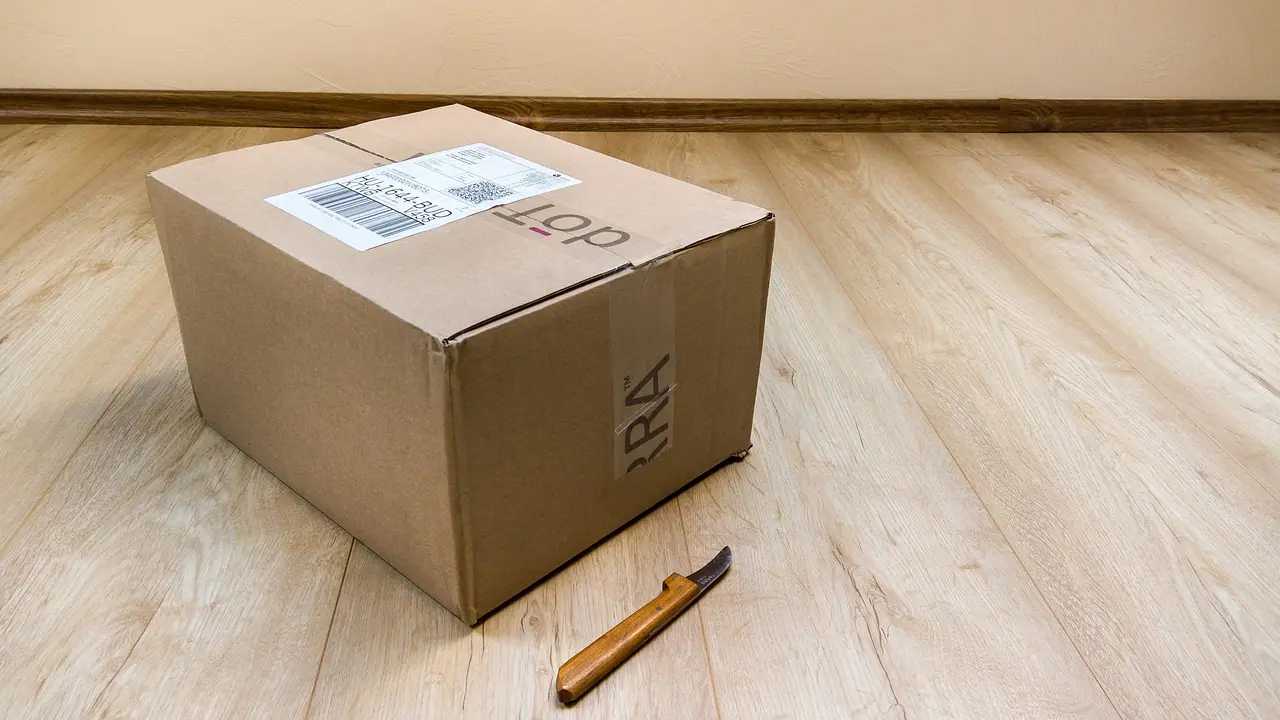
Retention starts when the parcel is opened, not when the email is scheduled.
Retention starts with the product and the delivery
No message sequence compensates for a disappointing product or a frustrating delivery. The strongest retention levers are often outside the marketing team: product quality, accurate descriptions, packaging that arrives intact, delivery on the date promised, and easy resolution when something goes wrong.
So the first retention audit is an experience audit. Read return reasons, support tickets and low-rated reviews. Order your own product to a tier-2 city address. Note every moment that would make you hesitate to buy again. See ecommerce customer experience.
Fig. 01 · Cycle
Tap to explore
The repeat purchase loop
Delight on arrival
Timing beats frequency
The most common retention mistake is messaging on the marketing calendar instead of the customer’s calendar. A face serum that lasts six weeks needs a reorder prompt around week five, not a weekly promotional blast. A sofa buyer needs care advice and perhaps a cushion, not another sofa offer.
Work out each product’s natural repurchase interval from your own data: the typical gap between first and second orders for customers who did return. Then build journeys around that interval. For durable goods, retention means cross-sell, referrals and advocacy rather than replacement.
The core flows
A handful of automated journeys does most of the work. Build them in this order, because each touches more customers than the next.
- 01Post-purchase confirmation and delivery updates, on the channel the customer prefers. In India that is often WhatsApp.
- 02First-use guidance, sent shortly after delivery: how to get the best result, what to expect.
- 03Review request, once the customer has had time to use the product.
- 04Reorder reminder, timed to the product’s usage cycle.
- 05Cross-sell, offering a genuinely complementary product.
- 06Win-back, for customers who have passed their expected reorder window without returning.
The tools differ by store, but the logic does not. Our guides to lifecycle marketing, WhatsApp marketing and loyalty programmes go deeper on each channel.
What a repeat customer is worth
Retention investment is easier to justify when you can see what an improvement in repeat rate is worth. The calculator below compares contribution from a cohort of new customers with and without additional repeat orders. All defaults are illustrative.
Calculator
Value of better retention
Illustration only: replace defaults with your own cohort data.
Cohort contribution today
₹4,20,000
First-year contribution before retention improvements.
= customers * cm * orders
Additional contribution
₹60,000
Value of the extra orders.
= customers * cm * uplift
Net gain after programme cost
₹20,000
Positive means retention pays for itself in year one.
= customers * cm * uplift - cost
Defaults are illustrations. Use your own numbers. Nothing you enter leaves this page.
Not every customer deserves the same effort
Retention budgets are finite, and customers differ sharply in what they are worth. A small group of frequent, full-price buyers usually contributes a disproportionate share of margin. Another group buys only on deep discount, and a third returns much of what it orders. Treating them identically wastes effort on the wrong people.
Fig. 02 · Hierarchy
Tap to explore
Where retention effort should go
01 · Advocates
Frequent, full-price, refer others: early access, recognition, a direct line
02 · Regulars
Reorder on cycle: convenience, timely reminders, complementary products
03 · One-time buyers
Bought once, within reorder window: first-use guidance and a well-timed prompt
04 · Lapsed
Past their window: a single honest win-back, then let go
Simple segmentation by recency, frequency and value is enough to start. See email segmentation. The aim is not to ignore anyone but to match the cost of each message to the value it can create.
Subscriptions and memberships
For consumables, a subscription turns retention from a series of decisions into a default. That can be powerful, but only if the customer stays in control: easy skipping, pausing and cancelling. Subscriptions that trap customers create complaints, chargebacks and a reputation that harms acquisition. Our guide to subscription ecommerce sets out models and pitfalls.
Paid memberships, where customers pay for benefits such as free delivery or member pricing, suit stores with frequent purchases across a broad range. They work when the benefit is felt on every order, not when it is a bundle of minor perks.
Discounts are a weak retention tool
It is tempting to bring people back with a coupon. It works in the short term, and it teaches customers to wait for the next one. Worse, much of the discount goes to people who would have reordered anyway. That is margin given away for nothing.
Better retention rewards are convenience and recognition: one-tap reorder on WhatsApp, saved preferences, early access to new launches, free samples of new products, and service that remembers the customer. Discounts have a place in win-back for lapsed customers, where the counterfactual is genuinely zero.
Myth vs reality
Retention myths
Measuring retention honestly
Retention numbers are easy to flatter. A blended repeat rate rises simply because the store is older. Measure by cohort instead: group customers by the month of their first order and track what share return, and how much they spend, over time. See cohort analysis.
- Measure over the product’s natural cycle; judging a quarterly-use product after thirty days is meaningless.
- Separate subscription renewals from voluntary repeat orders.
- Count delivered and kept orders, not orders placed.
- Compare cohorts acquired through different channels; some channels bring better long-term customers.
- Use a holdout group when testing a new journey, so you can see its incremental effect.
Indian context
In India, retention often happens on WhatsApp and through marketplaces as much as on the brand’s own site. A customer may discover a brand on a marketplace, reorder on quick commerce and contact support on WhatsApp. Retention strategy has to accept that customers move between routes and aim to make the brand, not any one route, the habit.
Consent and data rules matter as well. Collect clear opt-ins for WhatsApp and email, honour opt-outs promptly, and review practice against the DPDP Act with qualified advice.
Key takeaways
- 01The second order is often where an ecommerce customer first becomes profitable.
- 02Product quality, accurate descriptions and reliable delivery are the strongest retention levers.
- 03Time reorder prompts to each product’s natural usage cycle, not to the marketing calendar.
- 04Prefer convenience and recognition over discounts, which mostly reward customers who would return anyway.
- 05Measure retention by cohort over the right time window, using delivered and kept orders.
Frequently asked
- What is ecommerce retention?
- Ecommerce retention is the practice of getting existing customers to buy again. It combines product experience, delivery, post-purchase messaging, reorder reminders, subscriptions, loyalty and service. It is measured through repeat purchase rate, orders per customer and revenue or contribution by customer cohort over time.
- What is a good repeat purchase rate for ecommerce?
- It varies enormously by category. Consumables such as food, coffee or skincare naturally repeat more often than furniture or electronics. Rather than chasing an external benchmark, track your own cohorts over the product’s natural buying cycle and work to improve them quarter on quarter.
- How do I increase repeat purchases?
- Fix experience problems first, then build automated journeys: delivery updates, first-use guidance, review requests, reorder reminders timed to usage, relevant cross-sell and win-back. Offer convenience such as one-tap reorder, and use discounts mainly for lapsed customers.
- Which channel is best for ecommerce retention in India?
- WhatsApp is often the most natural channel for order updates, reorders and support, provided customers opt in. Email remains useful for richer content and lifecycle journeys. Many brands use both, with clear roles for each, and keep message frequency tied to genuine need.
- How is retention different from loyalty programmes?
- Retention is the outcome: customers buying again. A loyalty programme is one possible tool, usually rewarding repeat behaviour with points, tiers or perks. Retention can be strong without a formal programme if the product, experience and reorder journeys are good.
Published by Fabulous.Media, a network of specialist marketing agencies. Updated 9 October 2026. Platform features change often; check current official documentation before acting on platform-specific detail.